

Digging out
Coming back from crisis; AI & local news; Leadership in dynamic times.

Hi Friends,
It’s been over a month since Operation Metro Surge ended in Minnesota. After going through through a crisis at the scale our state has, the aftermath can feel… disorienting. What exactly happened here? What does it mean? What happens next? People often speak about the fog of war, but the fog of the aftermath also exists. The clarity that can come with a crisis often gives way to a grayer zone in how a community comes back.
Three of the themes emerging as Minnesota digs out from the storm:
Understanding what happened. There is still a lot we don’t know about the ICE raids in Minnesota. The Strib’s newsroom has been fact-checking statements made by federal and local officials, investigating the upheaval in the U.S. Attorney’s Office, and collaborating with other newsrooms to discover who the 4,000 people ICE says they detained are. Not to mention the ongoing investigations into the actions of ICE agents and the legal battles ahead. The original justification for the ICE surge in our state centered on the state government fraud in social services, which will continue to be a topic the Strib investigates.
Minnesota Pride. There is a sense of pride amongst many in our state about how Minnesotans responded to the ICE raids, which I wrote about in my last newsletter (What’s next?). We’ve had national media visit and write about how Minnesota responded. Native son Tom Friedman wrote a reported column in the NYT about “why Minnesota is more important than Iran to America’s future.” Kara Swisher and Scott Galloway came to town for an episode of Pivot and raised $150,000 for the Immigrant Law Center of Minnesota. Glamour wrote a profile of the women holding Minneapolis together.
And just this week, the “People of the Twin Cities” won the JFK Profile in Courage Award.
Of course, like any place, Minnesota doesn’t speak with one voice: in many parts of Greater Minnesota, the view of the last few months isn’t the same as the Twin Cities, as columns like this one from the mayor of Cross Lake in northern MN demonstrate.
Building what’s next. People are trying to return to state of normalcy, but it takes awhile - especially for communities who don’t feel safe. It’s a little like the aftermath of COVID: how quickly people return to normal routines varies by community and risk tolerance. At the annual economic development conference of Greater MSP, the economic development org for the region, you could feel a desire in the packed crowd for new momentum. The celebrated arrival of Pivot Bio, a billion-dollar biotech company who relocated here from Silicon Valley, drew enormous enthusiasm from a crowd eager to find reasons to celebrate. And this video featuring Tonya Allen, president of the McKnight Foundation, on the “Spirit of Minnesota” had many cheering.
With the Minnesota legislature in session, and an election season underway, the debates about what Minnesota needs next are in high gear. As the snow melts, hope springs eternal.

AI & local news
When I started at the Strib almost 3 years ago, one of the things we knew was that change would only get faster every year — and we have to run towards the future rather than being swept into it. But these last 3 months have brought a step change in AI development that easily outpaces anything I’ve seen so far.
The AI models have gotten so much better, and Claude Code has changed the world of the possible for development. It took me less than 10 minutes the other day to create a daily Strib news quiz, complete with a dancing gray duck if you got more than five questions right. As someone who doesn’t code, it felt magical and mysterious to build something so quickly.
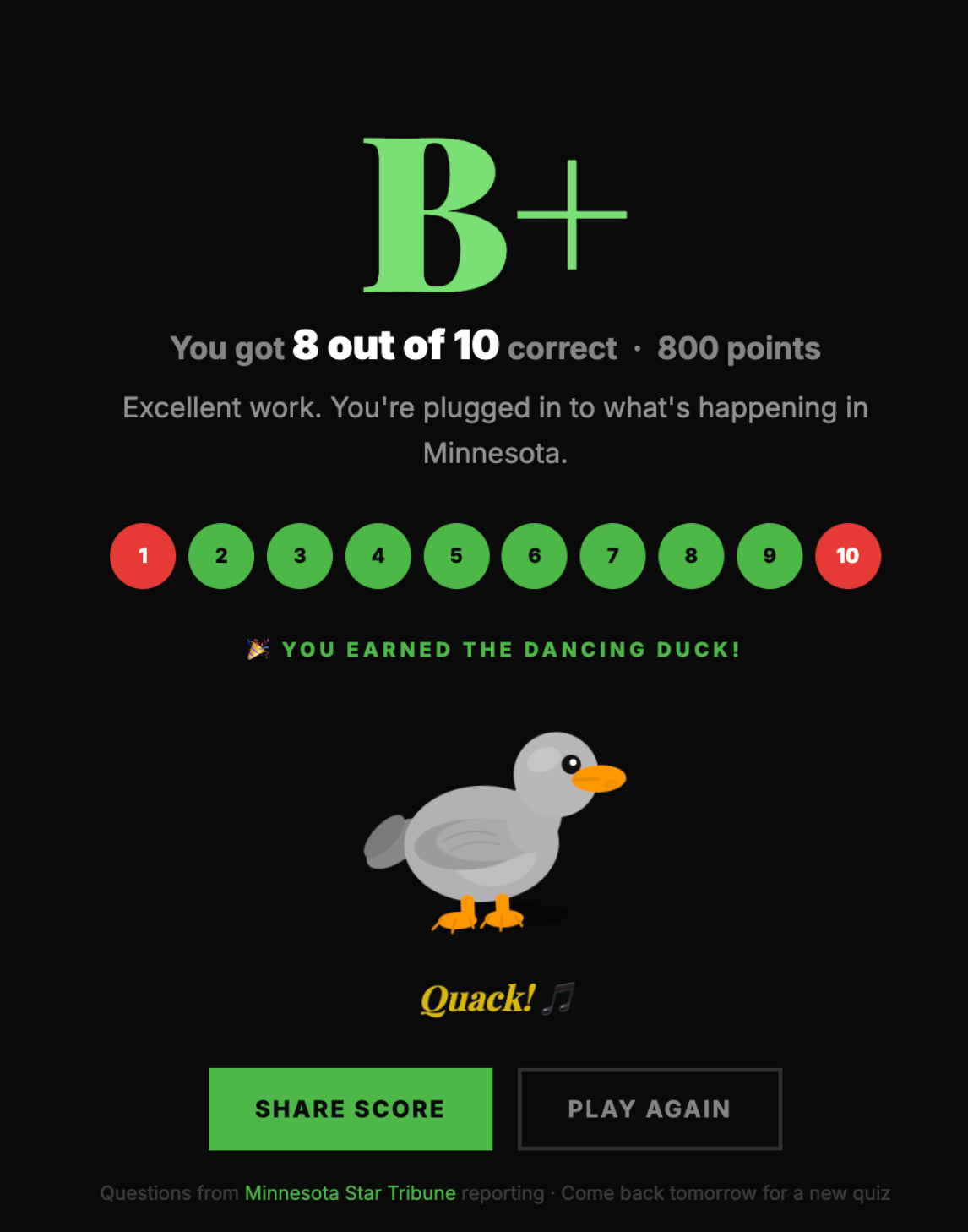
Like many in the news industry, I’m questioning every aspect of our business model right now. We can now build new things faster, operate more efficiently, and create new products for our audience. But: when people can get answers from a chatbot or AI assistant, then why go to a local news platform? We have to give them a reason to, every day.
Pew recently reported that 92% of Americans don’t think they need to pay for news (oof). If they instead buy subscriptions to services like Claude, Chat GPT, or Gemini, then do they have room in their subscription wallet for news? And when trust in news is at record lows, how do we build that trust back by reminding people our biggest differentiator is we have real people doing real journalism?
It’s on us to figure that out, and to be assertive in our use of AI, with some basic principles: Be curious and experiment. Be intentional and transparent. Keep Humans in the loop to ensure accuracy. Protect sensitive information and IP. Keep talking to each other about it.
Our ability to grow in this next wave of technology change will have everything to do with how quickly we can anticipate and adapt to how people get news - and how well we remind the world why real journalism matters.
Sharing what we’re learning
Given all that Minnesota has been through these past few months, many leaders here have had a chance to share what we’ve learned during yet another crucible for crisis leadership. I’ve had a few opportunities to reflect with some thoughtful people recently, here are a few clips.
Good Leadership Breakfast
Ready: Leaders to Know podcast
Poynter Center podcast on Reporting through a crisis
Carleton College Convocation
Breaking a 94-year drought
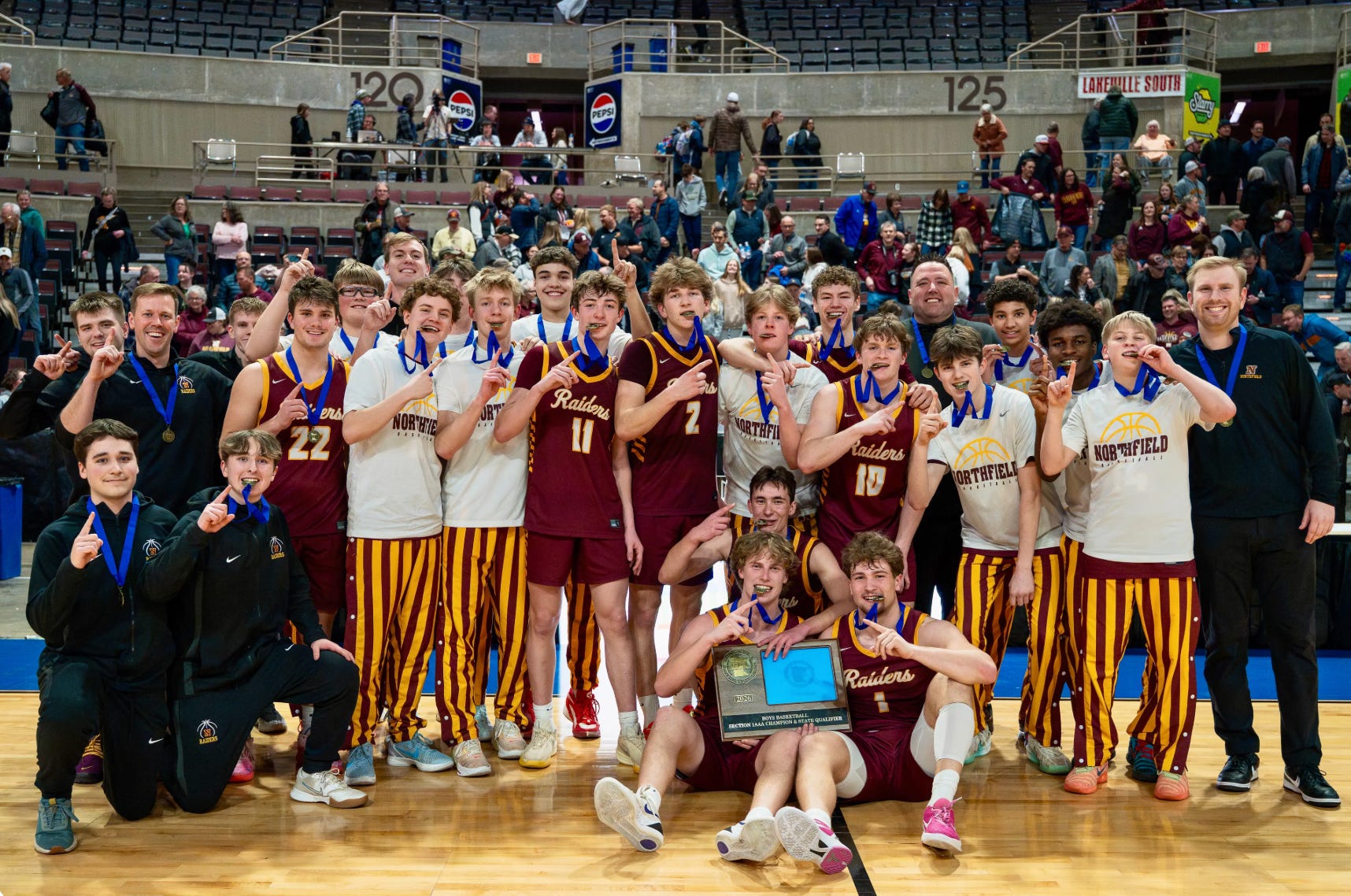
High school sports is the gift that keeps giving for the Minnesota Star Tribune. My favorite Strib Varsity story this month is about the Northfield High School boys basketball team that broke a 94-year drought and returned to the state tournament this year.
Proud of my alma mater, GO RAIDERS! :)
Thanks for reading, and happy (almost) Spring!
Yours,
Steve
🌈